
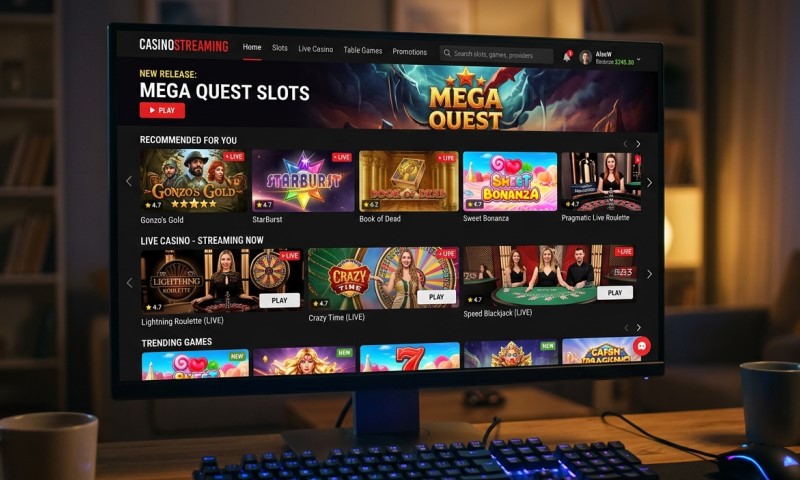
Early online casinos behaved like ordinary websites, where you clicked a game, waited for a response, then repeated the cycle for every action.
Modern systems operate as ongoing sessions instead: behind the interface sits a mesh of independent services handling identity, payments, fraud checks and game logic simultaneously.
Cloud infrastructure lets each component update without interrupting your play, which is why balances and menus update instantly.
When you log into a platform like Jackpotcity casino, you are effectively attaching to a running platform, with the difference subtle.
Yet, it changes the mental model: you stay connected while the software changes around you. Streaming apps introduced users to that feeling years ago; more than 70% of global internet traffic now consists of video streaming, reinforcing continuous-session expectations across digital services.
Casino platforms adopted the same pattern once players expected continuity across phones, tablets and desktops during a single session.
Video streaming changed everything
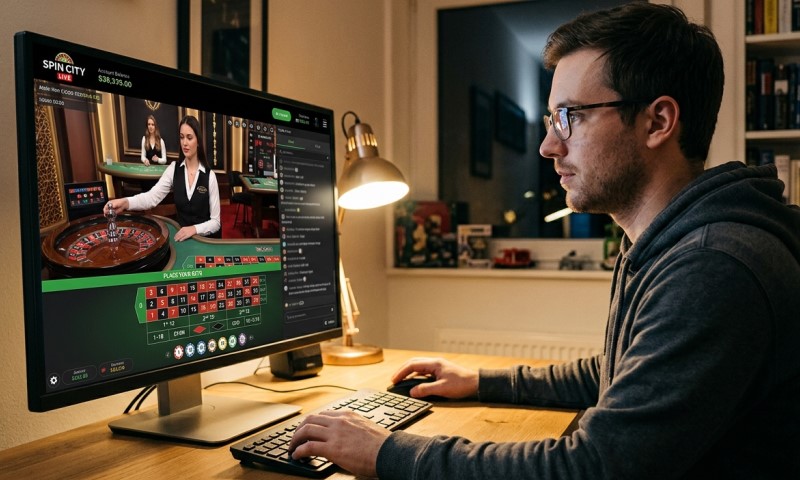
Live dealer games forced operators to solve broadcasting problems beyond web design problems, so as a result, infrastructure priorities shifted quickly.
Thousands of players now watch the same table feed while interacting individually, which requires synchronized media delivery and real-time data channels operating together.
Global edge servers distribute video frames while a parallel data stream carries bets and table states, so the interaction stays aligned.
When you open blackjack at Jackpotcity casino, the wheel spin, dealer movement and wager confirmations belong to one timeline, not separate page events.
Streaming services confronted identical challenges, particularly maintaining playback stability despite fluctuating bandwidth and device differences.
Consequently, gambling platforms adopted adaptive bitrate delivery and latency management so gameplay remains aligned with reality.
You notice it as smoothness because the table continues, the chips move and you stay inside the moment without interruption.
Architecturally, that behavior matches a live broadcast platform more than an interactive website since continuity matters more than individual requests. In practice, the system treats gameplay as media playback with transactional overlays attached.
Therefore, interaction becomes “layered” onto video. Today, Modern ultra-low-latency streaming pipelines typically deliver end-to-end delay of roughly 1–3 seconds, compared with traditional broadcast or standard OTT streaming delays of 20–45 seconds.
Platform tech in gambling: why online casinos now resemble streaming services architecturally
Traditional browsing depends on request-response logic, whereas platform systems rely on continuous event streams. Every action (placing a bet, changing limits or opening a lobby) becomes a message processed instantly across internal services, so reactions occur in parallel.
The interface listens to updates while connected to a persistent channel that remains active throughout your session. During a session at Jackpotcity casino, your balance adjusts, eligibility updates and session timers react in real time because multiple services subscribe to the same activity feed simultaneously.
Equally, streaming platforms behave similarly while tracking playback position and engagement metrics as you watch, so you therefore become part of a conversation between client and server beyond being merely a sequence of visits.
The experience feels responsive because the application anticipates change, so developers design the platform around state awareness, meaning it always knows what you are doing and what should happen next without restarting interaction.
As a result, latency becomes a usability factor, where the platform effectively predicts context, not reacting after the fact.
Libraries beyond single products
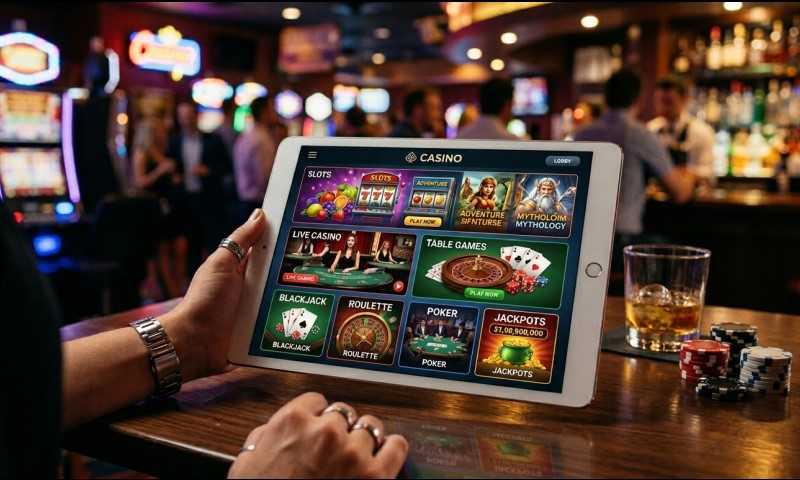
Online casinos once delivered a fixed software package, but modern platforms aggregate content from many studios through standardized integration layers.
A slot may come from one provider, a poker table from another and promotional logic from a separate system, yet the user still sees one coherent environment.
That orchestration resembles how streaming platforms combine films from different distributors under a unified interface, so the source becomes invisible.
While browsing Jackpotcity casino, you move through a catalog, where the platform loads games dynamically while preserving your session context, preferences and wallet state across transitions.
Technically, each title behaves like a media asset plugged into a running service, where compatibility, performance routing and device adaptation happen invisibly in the background, so interaction remains uninterrupted.
Ergo, the platform’s main role becomes coordination, managing relationships among services so the experience remains fluid even as sources constantly change.
Consequently, the casino behaves more like a content hub, with the architecture valuing interoperability over ownership of individual features.
Perhaps tellingly, recent industry reports indicate that over 60% of online casino games now run via modular content platforms, where each title streams dynamically from specialized providers.
Why convergence was inevitable
Both industries depend on uninterrupted engagement because a viewer abandons a stream when buffering interrupts immersion, so a player leaves when interaction feels fragmented. Modern gambling systems therefore adopt the same strategies used in large-scale media delivery, including distributed microservices, low-latency messaging and adaptive performance control.
Jackpotcity casino reflects this approach through persistent connectivity, live synchronization and seamless device transitions across environments. You can pause on one device, continue on another and remain in the same environment since the session lives on the platform.
Over time, the distinction between entertainment media and interactive wagering narrowed at the infrastructure level as both pursued continuous presence. Streaming architecture solved the challenge of keeping millions connected to a shared timeline and maintaining a consistent state.
Gambling platforms then applied that architecture to probability-based interaction where outcomes update continuously. The result feels familiar: open the app, stay inside, while everything updates around you, while the service quietly manages complexity behind the interface at Jackpotcity casino.
Ultimately, the convergence comes from solving identical technical constraints, with both platforms optimizing for persistence, synchronization and long-duration attention.